
Quantum Application Development Is Taught The Wrong Way
This is why you won't learn it in the usual textbooks

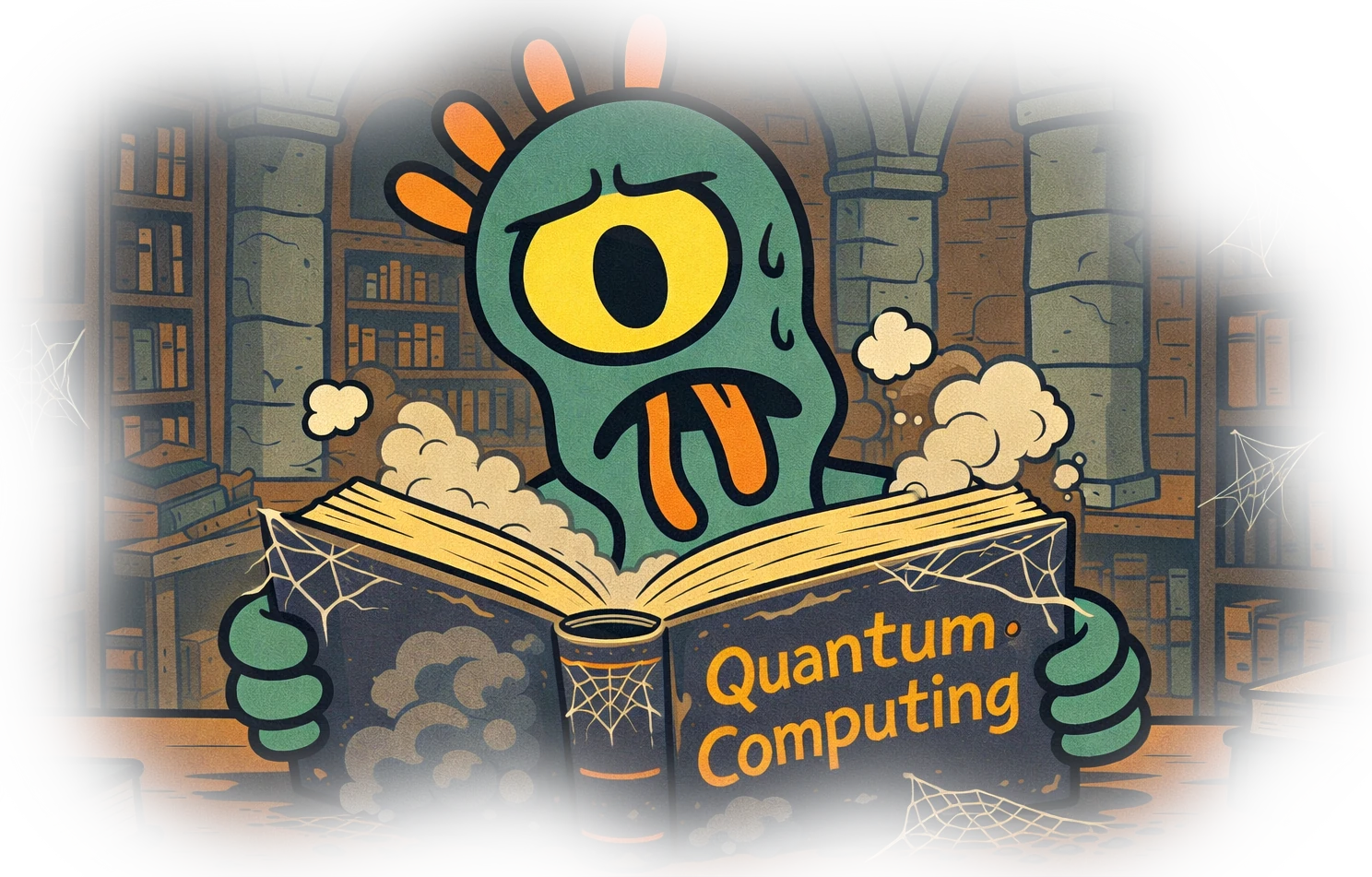
Let’s face it: the usual textbooks on quantum computing won’t teach you how to develop quantum algorithms.
Read that again.
However, this is not because you were not intelligent enough. There are other reasons for this: The usual textbooks and online courses on quantum computing
are crammed with technical physics jargon,
use mathematical equations that confuse rather than clarify, and
teach objects before purpose.
The Physics Jargon
Take, for example, this explanation of the Variational Quantum Eigensolver.

There are only two possibilities.
Either you understand what it says. Congratulations, you are already an expert in the field of quantum computing and need no further instruction. At least not the entry-level textbooks.
Or you don’t understand it. And that’s exactly the point! The usual explanations in quantum textbooks are incomprehensible. This makes them useless for beginners. Especially if your goal is not to become a physicist, but to develop quantum applications that solve real-world problems.
Such explanations are only useful for experienced physicists. But they don’t need them because they are already experts.
Unfortunately, this type of description is not an exception or a rare case. No, it is the blunt rule.
An equation is not an explanation
When a textbook presents an unfamiliar equation, no one simply reads it. Reading an equation requires effort: deciphering symbols, recalling rules, guessing meanings, and reconstructing the question that the equation is supposed to answer.
If you cannot or do not want to do this work, the equation teaches you nothing. It blocks you.
This is important because equations are a compressed language. They only communicate with readers who already know what is compressed. Without prior intuition, an equation is like a zip file without a decompression program. All the information is technically there, but it is inaccessible to you.
