
The One Thing Quantum Amplitude Encoding Is Good For
And when it's better to keep your hands off it

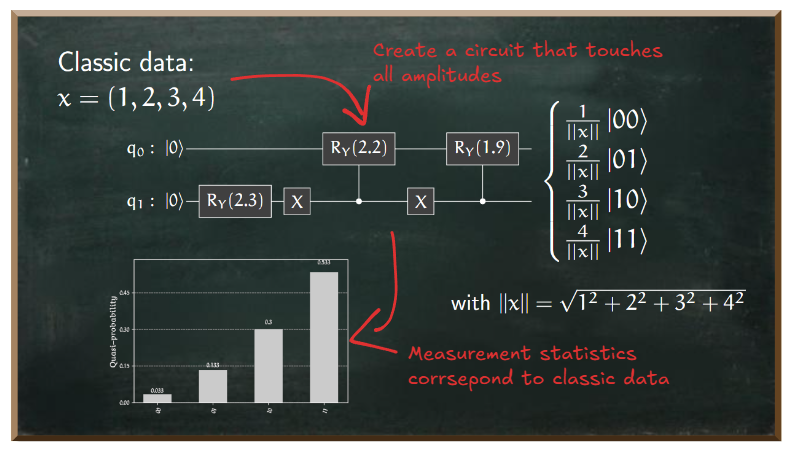
Amplitude encoding sounds powerful: you store an N-dimensional vector in just log₂(N) qubits. But here’s the catch most explanations skip.
The biggest mistake: People assume fewer qubits automatically mean an exponential speedup.
That’s wrong.
What actually limits you
Loading the data into amplitudes often costs O(N) operations.
Measurement only gives global properties, not the data back.
If state preparation dominates, the “speedup” disappears.
When amplitude encoding does make sense
The data is reused many times after loading.
You only need overlaps, norms, or similarities.
The data is generated inside the quantum process itself.
When it doesn’t
One-shot computations.
Frequent data updates.
Anything that needs full data readout.
Mental rule
Amplitude encoding saves space, not work.
Use it only when loading cost is amortized by what follows in your quantum algorithm.
I wrote a short, outline-level dossier explaining when amplitude encoding is useful, when it isn’t, and why the misconception persists: Read the full breakdown
— Frank from PyQML