
The Quantum Fourier Basis
The “parallel universe” myth in quantum computing

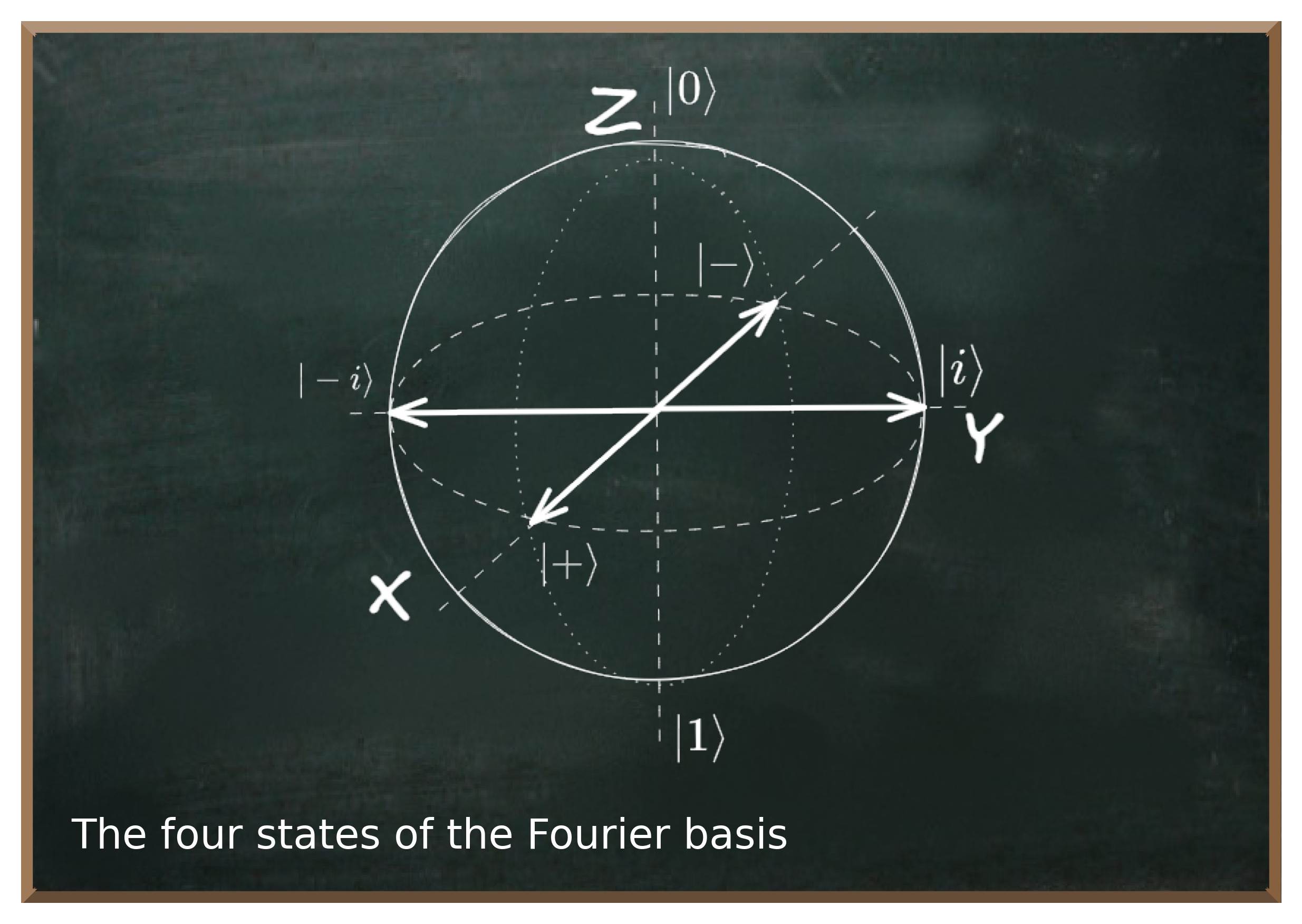
Many believe the Quantum Fourier Transform (QFT) allows a computer to try every possible answer simultaneously and read them all out at once. This is false.
If you measure a system immediately after applying a QFT, you don’t get all the answers. You get random noise.
The Fourier Basis doesn’t give you parallel readout; it gives you interference. It encodes data into the relative phases (angles) of qubits rather than their probabilities. The goal is not to read everything, but to manipulate these angles so that incorrect answers cancel out (destructive interference) and the correct answer amplifies (constructive interference) before you measure.
The Reality Check:
It’s not free speed: Transforming to the Fourier Basis requires significant gate overhead O(n²). If your problem doesn’t rely on periodicity, you are wasting resources.
Cyclic math: In this basis, values are angles. If you add numbers and exceed 360°, the value wraps around to 0. Unmanaged overflows result in garbage data.
No Boolean logic: You cannot easily check if a bit is “1” or “0” here. You must uncompute (Inverse QFT) back to the computational basis to perform standard logic or measurements.
Decision Rule:
Use the Fourier Basis only when you need to find the period or frequency of a function (like in Shor’s algorithm) or perform arithmetic via rotation. For everything else, stay in the Computational Basis.