
The Variational Quantum Eigensolver
The truth about quantum chemistry algorithms

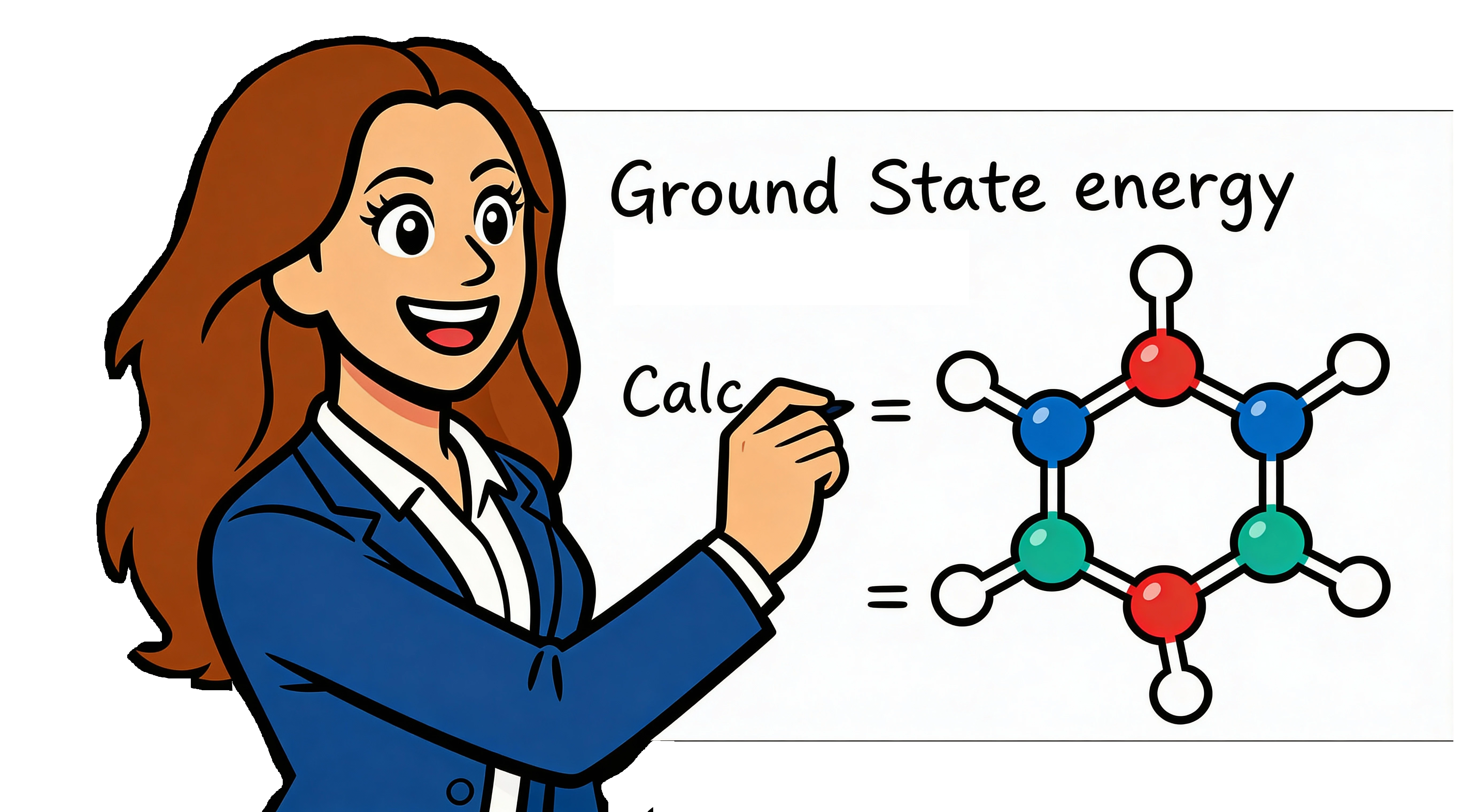
Quantum Computers are a reality. Today. The problem is: what do we do with them? Today?
The simple but crucial problem is that the devices are noisy and error-prone. This means that you will fail if you try to use a textbook algorithm such as Quantum Phase Estimation. This algorithm requires deep circuits consisting of long sequences of gates. These exceed the coherence time of your hardware. The Noise will destroy your calculation long before it is complete.
So what are we doing with Quantum Computers today?
One of the most compelling use cases for current Quantum Computers comes from chemistry.
First and foremost among the algorithms to address these problems is the Variational Quantum Eigensolver.
The Variational Quantum Eigensolver (VQE) is a hybrid quantum-classical algorithm used to find the lowest energy (ground state) of a quantum system. It prepares a parameterized quantum state on a quantum computer, measures its energy, and uses a classical optimizer to adjust the parameters to minimize that energy. This approach reduces quantum hardware requirements by offloading the optimization loop to classical computation.
Read the full technical post about how it works, including a Qiskit code example.
Regards,
Frank from PyQML